How to Choose Leak-Proof PVC Hose and Flexible TPE Hose for
Selecting the right plastic hose is not simply a choice between soft and hard materials. For industrial buyers, hose performance depends on the fluid, temperature, pressure, flexibility, installation method, regulatory requirements, and expected service life. TPE and PVC are both widely used in hose manufacturing, but they offer different performance characteristics. A structured selection process helps purchasing teams reduce design changes, avoid unnecessary material costs, and create a product that fits the actual working environment.
Material Characteristics of TPE and PVC
TPE, or thermoplastic elastomer, combines several rubber-like properties with the processing advantages of thermoplastics. It is flexible, elastic, and available in different hardness grades. TPE compounds can be designed for applications that require repeated bending, soft touch, good recovery, or resistance to low temperatures. They can also be processed through extrusion and co-extrusion, making them suitable for both simple tubing and multi-layer hose designs.
PVC, or polyvinyl chloride, is a widely used thermoplastic for industrial and commercial hose production. Its properties can be adjusted with plasticizers, stabilizers, and other additives. Flexible PVC is commonly selected for its balanced cost, chemical resistance, transparency options, and ease of extrusion. Depending on the formulation, PVC hoses can be produced in soft, semi-rigid, or reinforced structures.
Neither material is suitable for every application. TPE may be preferred where flexibility and elastic recovery are important, while PVC can be a practical option when cost control, dimensional stability, or broad chemical compatibility is a priority. The correct choice should be based on the complete operating specification rather than material preference alone.
Key Factors for Hose Specification
The first factor is the medium conveyed through the hose. Water, air, oils, cleaning solutions, chemicals, powders, and cosmetic or medical fluids can interact differently with the hose wall. Buyers should provide the exact fluid name, concentration, temperature, and exposure duration. A material that performs well with water may not provide the same results with oils or aggressive chemicals.
Temperature is equally important. Continuous operating temperature and short-term peak temperature should be listed separately. Repeated exposure to elevated temperatures can gradually affect flexibility, hardness, color, and tensile strength. If the hose is used outdoors, resistance to ultraviolet light and weathering may also need to be considered.
Mechanical requirements should include working pressure, vacuum conditions, bending radius, abrasion exposure, and the number of flexing cycles. For low-pressure air or water transfer, a flexible single-layer tube may be sufficient. For suction, pressure, or equipment movement, the design may require reinforcement, a thicker wall, or a special profile. Connection method is another practical consideration. The inner diameter, outer diameter, wall thickness, tolerance, and fitting design must be coordinated to ensure reliable assembly.
When a project requires a non-standard diameter, special wall thickness, precise length, or integrated functional profile, a custom PVC hose can be developed through an extrusion-based process. The same principle applies when the application needs a softer, more flexible, or more elastic material formulation. A custom TPE hose can be designed around the required hardness, surface finish, color, and mechanical behavior.
Extrusion and Product Construction
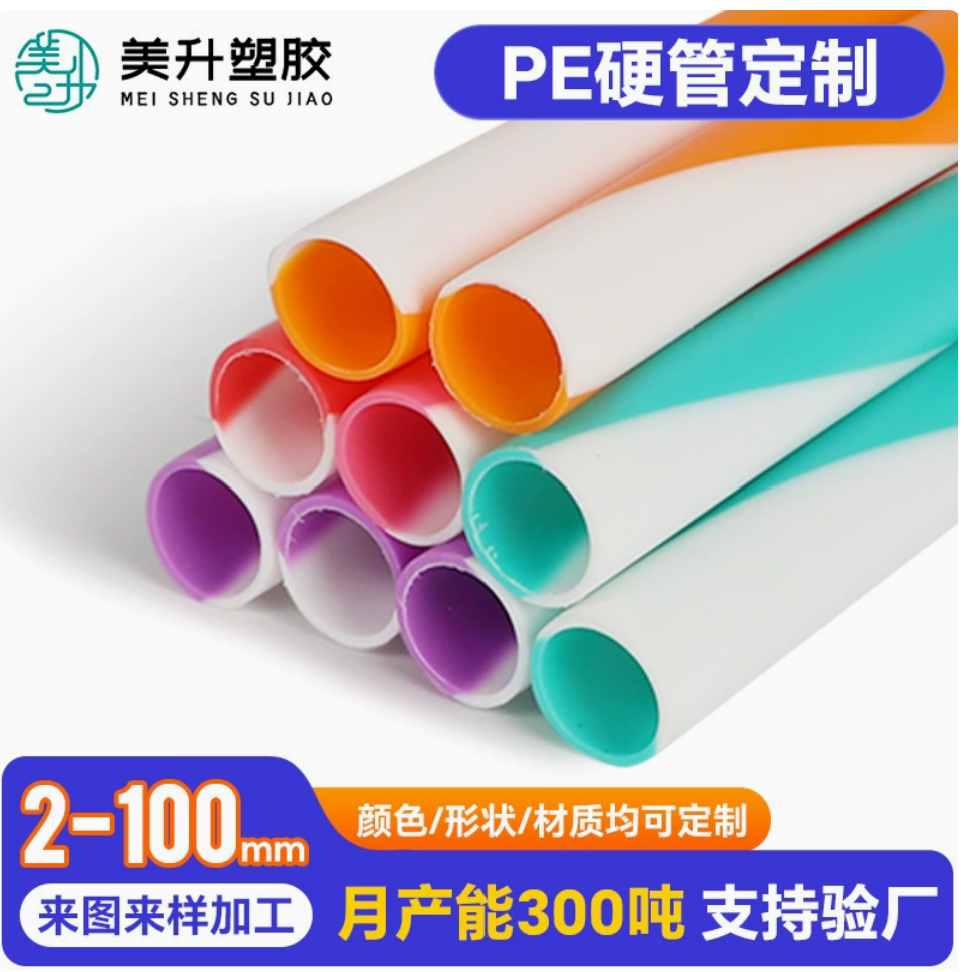
Extrusion is a continuous manufacturing process that forms plastic material through a die. It is suitable for producing long lengths of tubing and hose with consistent cross-sectional dimensions. A PVC extrusion hose may be manufactured in clear, colored, opaque, or semi-transparent material, depending on the application. The surface can be smooth or modified for specific handling and visual requirements.
TPE extrusion supports a wide range of profiles and hardness levels. A TPE plastic hose may be produced as a round tube, square tube, flat hose, corrugated tube, or custom profile. Co-extrusion can combine different materials or colors within one product, such as a soft sealing section with a more rigid support section. This can simplify assembly and reduce the number of separate components.
For demanding projects, reinforcement can be added through braiding, spiral structures, wire, or textile layers. Reinforced construction may improve pressure resistance or dimensional stability, but it can also increase wall thickness, minimum bend radius, and production cost. Buyers should balance performance requirements against installation space and budget.
Applications Across Multiple Industries
Flexible PVC hoses are commonly used in water transfer, drainage, ventilation, irrigation, pneumatic equipment, light industrial machinery, and general-purpose fluid handling. Transparent PVC is useful when visual inspection of the conveyed medium is needed. PVC hose is also often selected for protective sleeving, cable management, and equipment connection because it can be produced in various dimensions and colors.
TPE hoses are used in applications requiring repeated movement, soft flexibility, elastic recovery, or a more rubber-like feel. Typical areas include household appliances, fluid management systems, air and vacuum equipment, automotive components, consumer products, and industrial automation. Certain TPE formulations may also be evaluated for food-contact, medical, or laboratory applications, but compliance must be confirmed for the specific compound and intended use.
Application suitability depends on the exact grade and formulation. Buyers should request technical data and, where necessary, conduct compatibility and performance testing before approving a material for regulated or safety-sensitive use.
Customization, OEM Support, and Samples
A reliable hose supplier should be able to support the project from initial drawing review through production. Useful technical inputs include CAD files, cross-sectional drawings, target dimensions, hardness range, color reference, tolerance requirements, operating conditions, and annual demand. If the buyer does not have a finished drawing, a supplier can often review a physical sample or application description and suggest a manufacturable profile.
OEM support may include die design, material selection, color matching, surface treatment, printing, cutting, coiling, packaging, and assembly with fittings. Packaging requirements should be discussed early, especially when hoses are supplied in fixed lengths, kits, or retail-ready formats.
Sample service is an important step before mass production. A sample can be used to check dimensions, flexibility, fitting compatibility, appearance, odor, and installation performance. For technical applications, buyers may also evaluate pressure resistance, vacuum behavior, tensile strength, elongation, hardness, aging, and chemical compatibility. Sample approval should be based on measurable criteria rather than visual judgment alone.
A practical purchasing process begins with a complete application specification, followed by material review, drawing confirmation, sample production, testing, and final production approval. This approach helps buyers compare TPE and PVC objectively and select a hose that fits both technical and commercial requirements. Whether the project requires a standard tube or a fully developed custom profile, clear communication with the extrusion manufacturer is essential for consistent quality and efficient OEM cooperation.
标题:How to Choose Leak-Proof PVC Hose and Flexible TPE Hose for
地址:http://www.3mtj.com/blsjj/43086.html
免责声明:部分内容来自于网络,不为其真实性负责,只为传播网络信息为目的,非商业用途,如有异议请及时联系btr2031@163.com,本人将予以删除。
心灵鸡汤: